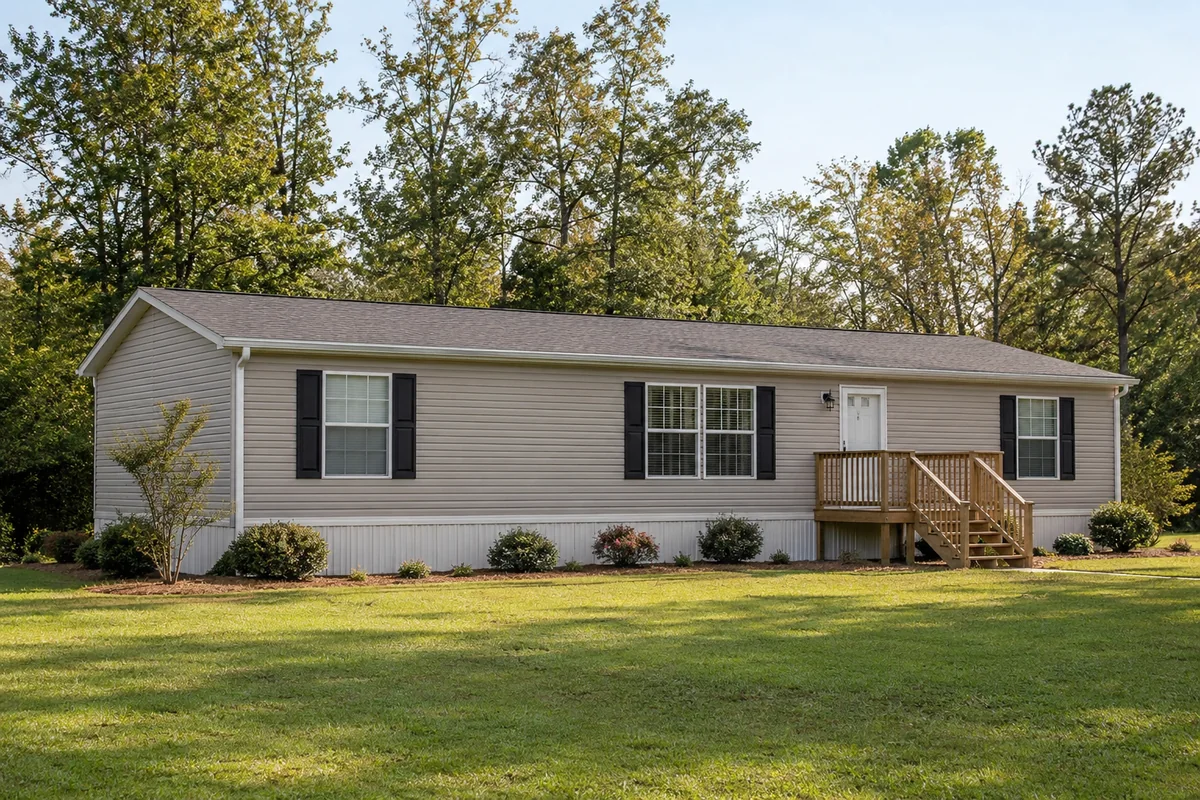
Identify the home accurately before requesting quotes
Give the agent the manufacturer, model, year built, serial or identification numbers, dimensions, and number of sections if available. Explain whether it is a manufactured home, a modular home, or another construction type. These terms should not be used interchangeably merely because parts of a building were assembled off site.
Photograph identifying labels and available data plates without removing or altering them. If documents are missing, ask what evidence the underwriter will accept and where appropriate records may be obtained. Avoid guessing a construction year or substituting a nearby installation date when the information is uncertain.
Describe attached porches, decks, carports, additions, and detached structures separately. Some additions can affect underwriting or require specific coverage. The insurance application should describe the current property, including alterations made by prior owners, rather than only the home as it originally left the manufacturer.
Keep Mississippi installation and anchoring records
The Mississippi State Fire Marshal’s Office, within the Mississippi Insurance Department, oversees factory-built home matters including licensing of relevant manufacturers, dealers, and installers or transporters. Its consumer guidance emphasizes proper installation, blocking, and anchoring. Insurance underwriting is a separate process, but these records can be important information for an insurer.
Keep installation documents, inspection information, invoices, and any anchoring certification. If the home has moved, identify when and where it was moved and provide records for the current site. A previous installation approval should not be assumed to establish the condition of a later installation.
Ask qualified professionals about inspection or correction of installation concerns. Do not alter anchors or structural components based solely on an insurance quote conversation. The State Fire Marshal’s official factory-built housing resources can help identify appropriate oversight and licensing information, while the insurer determines its own acceptance and documentation requirements.
The State Fire Marshal’s page lists factory-built housing rules with effective dates in July 2026. Use the current official materials when checking installation or licensing requirements rather than an old sales brochure. Insurance acceptance, installation compliance, and warranty remedies are separate questions, even when the same records help answer them.
If a dealer or installer provides paperwork, retain a complete copy and ask about any item you do not understand. When a quote requires additional evidence, provide it through the agent and confirm acceptance. Do not assume that delivering a document by itself means the insurer has approved the risk.
Compare the limit and the settlement method
A low purchase price does not necessarily establish the cost of replacing a home and restoring the site. Ask what the proposed limit includes, how it was estimated, and whether site preparation, debris removal, delivery, or other expenses are addressed. Their treatment depends on the form and limits.
Read the loss settlement provision carefully. Replacement cost, actual cash value, stated value, and other descriptions can produce different results and may involve conditions. Actual cash value accounts for depreciation under the applicable policy terms. A stated dollar limit does not automatically promise that the entire amount will be paid for every total loss.
Review any roof-specific schedule or settlement restriction. An overall replacement cost description may coexist with a separate roof endorsement. Ask the agent to explain how age, condition, deductibles, and exclusions interact before comparing a lower premium with a more comprehensive proposal.
List the home, contents, and surrounding structures
Create an inventory of belongings and identify property kept in sheds or other structures. Ask which items fall under the dwelling, other structures, or personal property limits. A deck attached to the home, a freestanding storage building, and a carport can be treated differently.
Check whether contents coverage is included and how it settles. Special limits may apply to jewelry, tools, collectibles, or other categories. If you operate a business from the property, disclose that activity and equipment rather than assuming personal property coverage fits business use.
Explain whether you own or rent the land. A park or landowner’s insurance does not automatically insure your home or belongings. Review any lease insurance requirements with your agent and keep them separate from the actual coverage being purchased. Being required to carry insurance is not the same as having an adequate policy.
Discuss wind coverage and documented anchoring together
Ask whether wind and hail are included, excluded, or insured separately. Review any wind, named storm, or hurricane deductible and ask how its dollar amount would be calculated. A Mississippi home outside the immediate coast still needs a clear understanding of its wind and hail coverage.
Anchoring records can matter to underwriting. MWUA’s published FAQs state that mobile homes must be anchored and secured in substantial compliance with its stated standards, with certification by an appropriate listed professional. Ask the servicing agent to verify the current requirement for the particular submission rather than assuming a photograph of an anchor is sufficient.
Do not confuse underwriting acceptance with a guarantee of storm safety. Follow official weather guidance and maintain an appropriate safety plan. Insurance addresses eligible financial losses after an event; it cannot make an unsafe shelter suitable or replace instructions from emergency officials.
Evaluate flood separately from other water damage
The Mississippi Insurance Department explains that standard homeowners insurance excludes flood damage. Ask about flood options for the home, eligible contents, and its specific location and installation. Elevation, foundation characteristics, and the way the home is secured can be relevant to the evaluation.
Do not assume the absence of a lender requirement means flood is impossible. Review available property information, drainage, previous water events, and the surrounding area. A drainage problem or a stream near the site deserves discussion even when the house is not marketed as a coastal property.
Also examine nonflood water provisions, such as plumbing leaks, backup, and repeated seepage. These are separate policy questions. The flood and storm surge guide helps distinguish causes of water damage without treating one general water coverage description as a complete answer.
Explain occupancy, rental use, and periods without residents
Tell the agent whether the home is your primary residence, a second home, rented to others, or empty. Explain if someone lives there seasonally or if you plan to change the use. A policy accepted for one occupancy should not be assumed to remain suitable after tenants leave or rental activity begins.
If the home is being moved, ask specifically about transportation, installation, and coverage at the destination. A policy covering a home at a scheduled address should not be assumed to protect every stage of relocation. Obtain the proposed coverage arrangements before the move takes place.
Renovations and additions should also be disclosed. Provide the work scope, contractor information, and anticipated schedule. Significant construction or a prolonged empty period may require different terms. See the vacant home and renovation guide for a structured way to discuss those transitions.
Understand the distinct Mississippi residual market options
Mississippi’s residential property plan and windstorm association are separate arrangements. MRPIUA’s published FAQs describe coverage for eligible residential dwellings statewide, with wind and hail excluded in Hancock, Harrison, and Jackson counties. MWUA serves six specified coastal counties and addresses wind and hail under its own terms and eligibility rules.
MRPIUA states that its settlement is actual cash value and that it does not provide liability, theft, or vandalism coverage. Its mobile home requirements include additional documentation for homes placed or moved within the circumstances described in its FAQs. Do not treat plan availability as automatic acceptance of a particular home.
MWUA also has its own mobile home anchoring requirements and does not provide liability or loss of rents. A wind arrangement therefore needs to be considered alongside other required protection. The Mississippi FAIR Plan and windpool alternatives guide explains the distinction and the importance of comparing the whole coverage arrangement.
Consider surplus lines without assuming a standard package
A surplus insurer may consider a manufactured home that does not fit an admitted carrier’s underwriting rules, depending on the property and available market. Ask which insurer is proposed, what factors affected eligibility, and whether any repairs or inspections are conditions of coverage.
Review nonadmitted status, placement disclosures, guaranty protection limitations, taxes, and fees with the placing professional. Then examine building and contents settlement, wind terms, liability, loss of use, water restrictions, and all deductibles. A surplus policy can offer a useful option while still leaving important exposures for the owner to retain or insure separately.
Hypothetical example: an owner receives a quote for an older manufactured home with an attached porch. The useful follow-up is whether the porch is included, how the roof settles, and whether wind is covered. The word surplus does not answer any of those questions by itself.
Document repairs and condition instead of relying on age alone
Gather photographs of the roof, siding, windows, skirting, steps, decks, and accessible utility areas. Include receipts for roof replacement and updates to electrical, plumbing, or heating systems. If past damage has been repaired, retain before-and-after evidence and any contractor documentation available.
Disclose unresolved damage and open claims. A complete submission allows an underwriter to distinguish an older well-maintained home from one with known problems. It cannot guarantee approval, but it avoids a quote based on incomplete or incorrect assumptions.
Keep track of inspection requirements and deadlines after the policy starts. Ask for written confirmation when requested repair evidence has been accepted. When the policy renews, compare endorsements and settlement terms with the prior year, particularly if the roof has reached an age that triggers a different provision.
Build a comparison that reflects an actual loss
Record the home limit, contents limit, detached structure coverage, liability, loss of use, settlement methods, and every deductible. Add a line for major exclusions and any separate wind or flood policy. Compare the complete annual cost and ask about cancellation provisions, fees, and premium financing where used.
Ask how you would report a claim and which insurer handles each part of a multi-policy arrangement. Keep policy numbers, photographs, inventories, and contact information somewhere you can reach if the home is inaccessible. Notify the relevant insurer promptly after a loss and follow its documentation requirements.
Finally, verify that the issued documents show the correct address, ownership, mortgagee, home description, and occupancy. An attractive quote does not replace that final check. The goal is a documented arrangement that fits your particular Mississippi home and makes the remaining financial responsibilities understandable.
Common questions
Can an older manufactured home be insured in Mississippi?
It may be possible, depending on the home’s condition, installation, location, occupancy, and insurer requirements. Provide accurate identifying details, photographs, roof information, updates, and claims history. Age alone does not determine every available option, but no agent can promise acceptance before the relevant underwriting review.
Are modular and manufactured homes insured the same way?
Not necessarily. Explain the construction type accurately and provide available identification and installation documents. Underwriters may evaluate the categories differently. Do not use mobile, manufactured, and modular interchangeably on an application simply because the home was assembled partly off site.
Does a manufactured home policy automatically cover wind and flood?
No. Ask whether wind is included, excluded, or separately placed and review the applicable deductibles. Flood is a separate coverage question and is excluded from standard homeowners coverage. Compare the entire arrangement, including contents and any limitations connected to location, installation, or anchoring.
Why does the insurer want anchoring or installation documents?
They help evaluate the home at its current site and may be required by the proposed program. Mississippi’s State Fire Marshal oversees relevant factory-built housing matters, while insurers apply their own underwriting criteria. Provide actual records and ask what current documentation is needed rather than assuming old records are sufficient.
Will MRPIUA provide replacement cost and liability coverage?
Its published FAQs state that settlement is actual cash value and that it does not provide liability, theft, or vandalism coverage. Eligibility and required documentation still apply. Review any plan proposal as part of a complete coverage comparison rather than assuming it is equivalent to a broad homeowners package.
What if I move my manufactured home to another site?
Contact the agent before relocation. Ask about transportation, installation, coverage at the new address, inspections, and documentation. A policy written for the original location should not be assumed to cover every stage of a move. Keep the new installation records and confirm the final policy details.
Sources and scope
Official materials checked October 30, 2026. Rules, plan eligibility and policy forms can change. Sources support the topics identified here; they do not confirm a particular policy will cover a loss.
- Mississippi Insurance Department: Homeowner’s InsuranceGeneral coverage categories, valuation and flood exclusions.
- Mississippi State Fire Marshal: Factory Built HomesState oversight, licensing, anchoring, blocking and installation safety resources.
- MRPIUA: Frequently Asked QuestionsACV settlement; liability, theft and vandalism exclusions; mobile-home documentation and geographic wind exclusions.
- MWUA: Frequently Asked QuestionsMobile-home anchoring requirement, six-county geography, and no liability or loss-of-rents coverage.