Understand Mississippi's distinct market routes
A private admitted insurer may offer homeowners coverage with wind included or subject to particular restrictions. A surplus lines insurer may consider a property outside standard underwriting preferences. The Mississippi Windstorm Underwriting Association, commonly called the windpool, is a different route from private surplus lines. Mississippi also has the Mississippi Residential Property Insurance Underwriting Association. These are distinct programs, not interchangeable names for one comprehensive homeowners policy.
The Mississippi Insurance Department lists both associations among residual market plans. Eligibility, territory, available coverages and current application requirements should be checked against the specific program's current materials. Do not assume a home qualifies merely because it is in southern Mississippi, or that qualifying for a residual market plan makes it the best fit for every household.
A useful comparison considers the complete arrangement. A lower price for a wind-only policy is not a meaningful comparison with a package that also includes fire, theft, liability and living expenses. See the Mississippi FAIR Plan and windpool guide for the distinctions to raise when discussing alternatives.
MWUA’s published FAQ identifies George, Hancock, Harrison, Jackson, Pearl River and Stone as its six-county territory. It also says liability and loss of rents are not provided. Those details make it important to review the rest of the insurance arrangement. MRPIUA has different coverage and eligibility terms; its existence should not be treated as proof that every coastal risk or expense is insured. Confirm the current application rules and policy forms for the actual property before relying on either route.
Read the wind and hurricane deductible language
Ask for every applicable deductible in writing. A quote may have an ordinary property deductible and separate terms for wind or hail, a named storm or a hurricane. These labels can have different triggering definitions. The contract determines when the special deductible applies, which coverage amount is used and whether the deductible applies per occurrence or in another way.
A percentage deductible is not necessarily a percentage of the repair bill. Hypothetical example: if the policy applies a two percent deductible to a $400,000 dwelling limit, the deductible is $8,000. That illustration describes arithmetic, not a Mississippi standard or an offered policy. Ask the agent to calculate the actual dollar exposure using the specific quotation.
Also check how separate policies interact. Wind damage and flood damage from one storm can involve different contracts and deductibles. An escrow account that pays annual premiums does not automatically reserve money for those deductibles. Choose an arrangement your household can maintain and discuss whether a less expensive premium transfers an unaffordable amount of the loss back to you.
Separate hurricane wind from flooding and storm surge
A hurricane is a weather event, not one uniform insurance peril. Wind may remove roofing, rain may enter through a storm-created opening, and rising water may enter at ground level. The source and sequence of damage matter. Standard homeowners coverage does not ordinarily insure flooding, and buying a wind policy does not itself establish flood coverage.
Review the flood and storm surge guide alongside the wind quote. Ask about building coverage, contents coverage, the treatment of lower enclosures, coverage limits and any waiting period. Do not interpret a lender's decision not to require flood insurance as a promise that the property cannot flood.
After damage, report the facts you know without guessing which cause explains everything. Photographs of water lines, damaged roof areas, debris, openings and neighboring conditions may help the insurers investigate. Stay out of unsafe areas. If more than one insurer may be involved, tell each about the other relevant policies and ask how inspections should be coordinated.
Review rebuilding costs and coastal property features
The amount paid for a property is not the same thing as the cost of rebuilding the dwelling. Land, market demand and a desirable view can affect a sale price without representing construction costs. Conversely, demolition, materials, labor and access can make rebuilding expensive. Discuss an accurate replacement-cost estimate based on the actual structure rather than choosing the loan balance automatically.
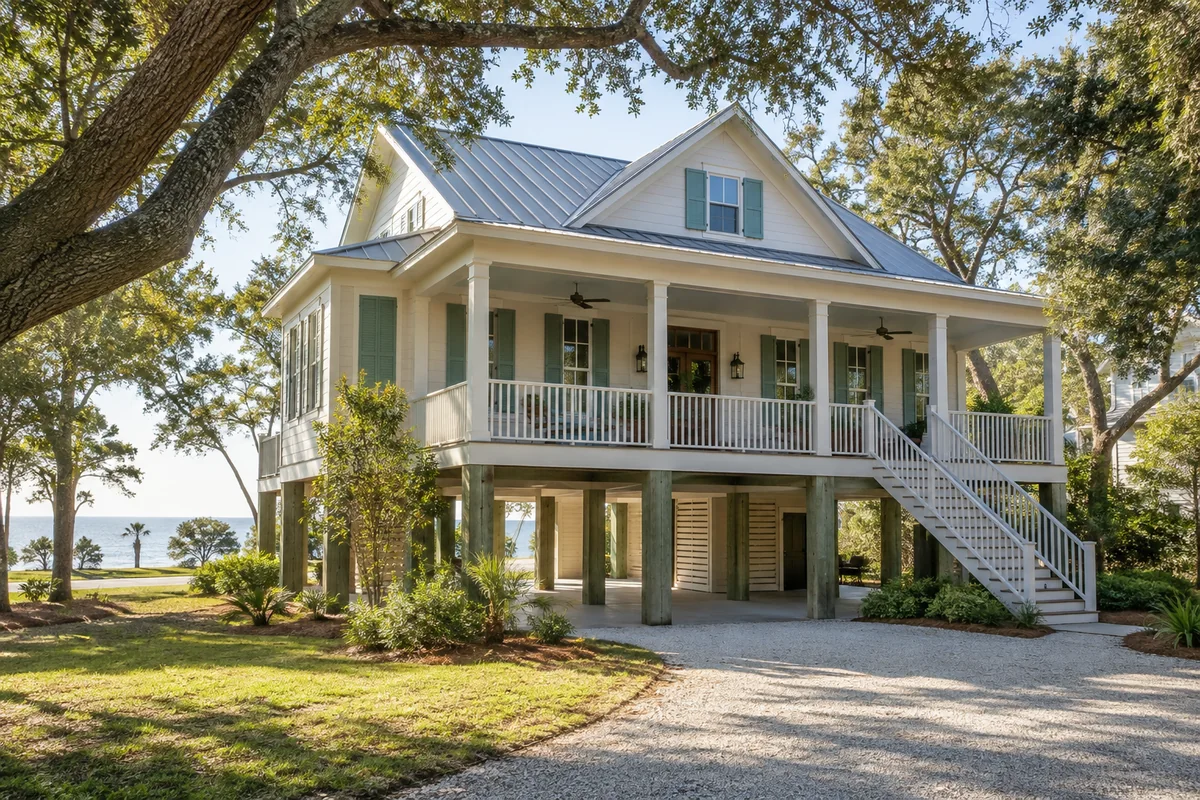
Identify features such as elevated construction, multiple stories, specialty windows, substantial porches and custom finishes. Ask how detached structures are valued and whether any coastal feature is excluded or subject to its own limit. Describe improvements since the previous application, including enclosed areas or additions, even when they do not appear in an older property record.
Ask about ordinance or law coverage as well. Requirements that apply during reconstruction may produce costs beyond replacing the damaged materials in the same manner. This coverage has its own terms and limits. A broad-sounding replacement-cost phrase should not be treated as an unlimited promise to rebuild every feature under every possible condition.
Check the roof settlement before accepting the quote
A roof can be insured differently from the rest of the dwelling. The quote may use replacement cost, actual cash value, an age-based payment schedule or an exclusion. Cosmetic-damage restrictions and matching provisions can also change the result. Ask for the roof endorsement itself, not only a verbal description that the house is covered.
Actual cash value generally reflects depreciation, so the deductible may be only part of the owner's out-of-pocket expense. A scheduled payment can operate differently again. The older roofs and roof exclusions guide explains the questions to ask before treating a lower premium as an improvement.
Provide accurate roof age, material and condition. If a roof was replaced in phases, explain that instead of assigning one new date to the entire system. Paid invoices, permits where available and clear ground-level photographs can support the application. An inspection or replacement may improve how a risk is presented, but no particular project guarantees acceptance or a premium reduction.
Prepare for underwriting before the next storm
Gather the current declarations, endorsements, renewal or nonrenewal notice, claim information and recent photographs. Include the occupancy schedule, any rental use and a realistic date when coverage is needed. When the property is being purchased, add lender requirements and the closing date. A complete application reduces avoidable back-and-forth and helps expose gaps while there is time to address them.
Ask whether the insurer has an inspection requirement, a repair condition or a limitation on binding during an approaching storm. Restrictions can differ between insurers and change with circumstances. Do not wait for a warning to assume a new policy, higher limit or additional coverage can take effect immediately.
Keep existing coverage in place until replacement coverage has been expressly confirmed effective. A quote, payment request or submitted application is not by itself proof that insurance is bound. Obtain written confirmation showing the insurer, effective date, property and coverage, then reconcile it with the policy when it arrives.
When separate policies are necessary, track each renewal and payment date individually. A household may receive more than one bill and more than one insurer’s inspection request. Confirm which payments the lender handles through escrow and which remain your responsibility. Compare the combined annual cost, including disclosed charges, and keep enough detail to avoid mistaking one renewed contract for renewal of the entire arrangement.
Plan for a claim without depending on assumptions
Create a room-by-room inventory and store a copy away from the home. Include exterior features and serial numbers for important equipment. Keep receipts for mitigation work and major improvements. These records help distinguish the home's prior condition from storm damage and support a more accurate discussion about what was lost.
After a loss, contact the insurer promptly and ask about duties, documentation and time-sensitive requirements. Make reasonable temporary repairs when safe, keep the receipts and photograph conditions before they change. Avoid discarding damaged property before asking what evidence the adjuster needs. Obtain professional help for structural damage, electrical hazards or an unsafe roof.
Discuss additional living expenses before committing to expensive arrangements. Whether an expense qualifies can depend on covered damage, the reason the home cannot be occupied, policy limits and other conditions. Evacuation, utility failure and physical damage are different situations. The policy's wording and the insurer's written explanation should guide financial decisions while the claim is being evaluated.
After permanent repairs, save completion records and review any remaining insurer conditions. If you changed roofing, elevated equipment or altered a structure, tell the agent so the next application and renewal describe the repaired property accurately. A documented improvement can be useful evidence, but ask for written confirmation of any resulting coverage or price change.
Common questions
Does a Mississippi coastal homeowners policy always include hurricane coverage?
No single label answers that question. Check whether wind and hail are included, excluded or insured separately, then review the special deductible and roof terms. Flooding and storm surge require their own analysis. Ask the insurance professional to identify the actual contract that would respond to each type of damage.
Is the Mississippi windpool the same as surplus lines insurance?
No. The Mississippi Windstorm Underwriting Association is a residual market association, while surplus lines describes a method of placing coverage with an eligible nonadmitted insurer. A homeowner should compare the terms, eligibility and total cost of the actual arrangements rather than assume the names describe equivalent policies.
Will a wind policy pay for storm surge?
Do not assume that it will. Storm surge is a flooding concern, and ordinary wind coverage should not be treated as flood insurance. Review a separate flood policy or a clearly documented flood coverage arrangement, including its limits and exclusions. An agent should explain how the wind and flood contracts fit together.
Can I use my home's sale price as the dwelling limit?
A sale price includes market influences and may include land value. The dwelling limit should be evaluated against an appropriate rebuilding estimate, policy requirements and the home's actual construction. Give the insurance professional accurate information about size, materials, elevation and improvements rather than automatically selecting the sale price or mortgage balance.
Can I change insurance when a hurricane is approaching?
Availability depends on the insurer and the circumstances. Companies may restrict new coverage or changes when a storm threatens, and flood coverage may involve a waiting period. Ask early about binding restrictions and the exact effective date. Never cancel the existing policy on the assumption that an application has already become coverage.
What should I send with a coastal home quote request?
Start with the property address, actual occupancy, current coverage documents, roof information, claims history and the date insurance is needed. Add lender requirements and details about elevated construction, detached structures and rental use. Avoid sending sensitive identification or financial information through ordinary email; request an appropriate secure method when needed.
Sources and scope
Official materials checked October 30, 2026. Rules, plan eligibility and policy forms can change. Sources support the topics identified here; they do not confirm a particular policy will cover a loss.
- Mississippi Insurance Department: Homeowner’s InsuranceReplacement cost, inventory, flood exclusion, underwriting information and claims preparation.
- Mississippi Insurance Department: Residual Market PlansLists MWUA and MRPIUA as separate residual market associations.
- Mississippi Insurance Department: Weather Disaster PreparednessStorm preparation, coverage review and documentation after a loss.
- Mississippi Windstorm Underwriting Association: FAQsSix-county territory and no liability/loss-of-rents coverage.